Alfa in the NATO Phonetic Alphabet
By Juan Mediavilla. Published May 31, 2026. Last updated May 31, 2026.
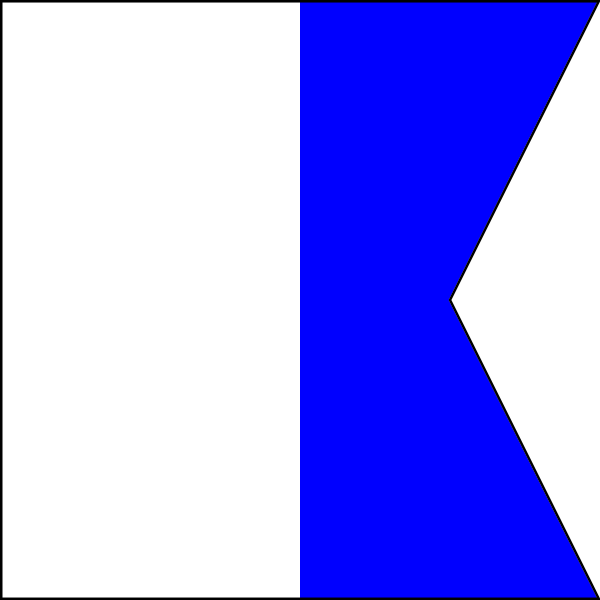
A is Alfa
The official International Radiotelephony Spelling Alphabet word for the letter A is Alfa, pronounced AL-FAH. It is frequently written as Alpha in everyday English, but the international spelling deliberately uses an f.
ICAO's history of the spelling alphabet explains the reason: speakers of some languages may not know that the English ph spelling should sound like f. The spelling Alfa makes the intended pronunciation more portable across language backgrounds. NATO's own codes and signals reference PDF also uses Alfa.
Alfa in Morse code
The Morse code for A is:
.-
That is one dot followed by one dash. It is a useful first pattern for learning Morse because it is short, visually distinct, and easy to recognize in audio playback.
Use the ABC Nato translator to see Alfa alongside its signal flag and hear the Morse timing.
Before Alfa: Able
The modern alphabet was not the first shared spelling system used in aviation and military communication. During the Second World War, allied services used the Able Baker alphabet, named after its words for A and B. After the war, ICAO studied replacements that would work more reliably across languages and radio conditions.
ICAO implemented the final international version on 1 March 1956. Organizations including NATO, the International Telecommunication Union, and the International Maritime Organization adopted it. The result is the alphabet now commonly called the NATO phonetic alphabet.
When Alfa is useful
Spoken letters can be surprisingly easy to confuse. A may be misheard as J, K, or 8 when a connection is poor, a speaker is far from the microphone, or people have different accents. Saying Alfa gives the listener a longer, more distinctive sound to verify.
In aviation, the FAA Aeronautical Information Manual advises pilots to use phonetic equivalents for single letters and difficult words during adverse communication conditions. The same principle works when spelling a name, email address, or booking code over the phone.
Continue with the complete A-Z reference or read about Zulu.